Can you tell where these people are hurting?
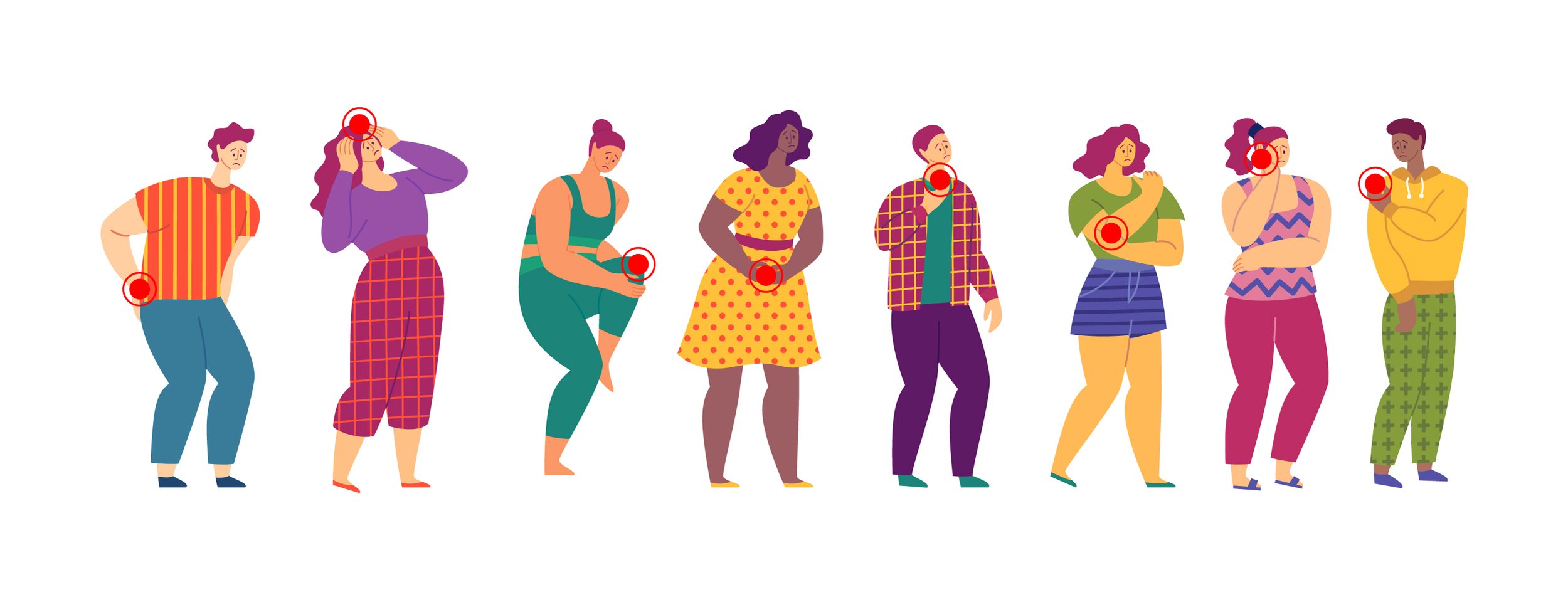
Ok, the red bullseye is kind of a giveaway. But you would know anyway, right? A person’s whole body will curl around the sore spot to give it protection and slack. When I place my hand on the top of your head as an assessment, I’m sensing that same pull in your body’s tissues.

(This is really what it feels like.)
Our body’s first response to pain or another warning signal is to immobilize the area. This is wise and useful to prevent harm and allow healing. But sometimes, the immobility sticks. Maybe the fascia becomes dry because the lockdown doesn’t allow fluids to circulate. Maybe the muscles on guard duty forget they once were movers. With impressive adaptability, our body repatterns itself so that our movements — walking, reaching, breathing, digesting — maintain this area of stasis.
Usually, our body’s protection is focused around something delicate and important, like an artery. Thanks to our body’s ingenuity, we mostly keep functioning, and might not even notice that our experience of fluid expressivity is ever so less dimensional.
Still, adaption tends to lead to counteradaption, and eventually complaints will arise.
The modalities I practice aim to locate the very specific tissues that have lost their bounce and remind them that they are part of a system of movement. As our body and brain experiment with this renewed opportunity, the layers of limitation and workarounds throughout the rest of the body dissolve.
By paying attention to what’s been avoiding attention, this bodywork frees up effort and invites your body to organize around flow.