
Some thoughts about quieting
When a new client signs up for a session, I always ask what they are seeking from massage. Recently, someone replied, “connection with self,” and I smiled because it so perfectly describes one of the most important benefits I get from the bodywork I receive. I get massage or craniosacral for many reasons, and I definitely value it for helping me heal injuries and stay out of pain. But I also notice that after a session, I am more grounded, more patient, calmer, happier, and, dare I say, wiser. That is, I make better decisions and feel clearer about who I am and what I want — and don’t want.
One reason for this effect is that the bodywork quiets and downregulates the nervous system, shifting it from a state of action and reaction to restoration and repose. The benefits of true relaxation should not be underestimated! We are probably all aware of the many negative impacts stress has on our health and wellbeing. Studies have even found that living in a noisy environment can decrease cardiovascular health and increase risk of heart attack or stroke because the body responds to a loud or startling sound by revving up its sympathetic “wake up and pay attention” response. When we spend too much time in a sympathetic state and don’t get enough parasympathetic time, our body doesn’t get to heal and process. We build up tension and inflammation.

Being in sympathetic mode even changes how we think and what we notice.
Have you ever been startled by something small and then felt extra jumpy for the rest of the day?
Your nervous system is trying to protect you by keeping you alert to potential threats. And it’s on the lookout for threats because it’s on alert. This can create a kind of self-perpetuating cycle: maybe you become overwhelmed by things that ordinarily wouldn’t bother you or get into an argument about something you don’t really care about.

Essentially the same thing happens at the cellular level. When the nervous system receives the same signal over and over again, it remodels itself to be able to process those signals more efficiently. If you practice the piano every day, you’ll be able to play more quickly and fluidly and pick out details in the sound that you hadn’t heard before. If your shoulder sends your brain a pain alert several times a day, the nerves along that pathway will become sensitized so that they can detect ever more subtle sensations, mark them as painful, and speed them through the system. Just like every piece of fluff can start to look like a spider, every sensory experience can start to feel like pain.

What you need is a reset.
Bodywork brings the nervous system into a state of deep relaxation. You may have even forgotten that it’s possible to be so relaxed. From that brain space, the world around you and your internal experience will seem different yet again. You may notice that you are less excitable; it’s easier to work out what’s important and what isn’t worth getting upset about. You may also notice what activates your pain or stress response and be able to intervene earlier. When your brain isn’t flooded and running defense, it can process your current experience in detail and create a much more accurate map of what is happening. You may discover that your shoulder doesn’t hurt all the time, but only with specific movements. One client recently was able to notice that it was the particular way she steps into her car that was aggravating her hip and then start to move differently.
Ultimately, attending to our body’s restoration helps us connect to self, stay grounded in our own truth, and literally make better sense of the world around us.

What are you sensing on the top of my head?
It all begins with an idea.
Can you tell where these people are hurting?
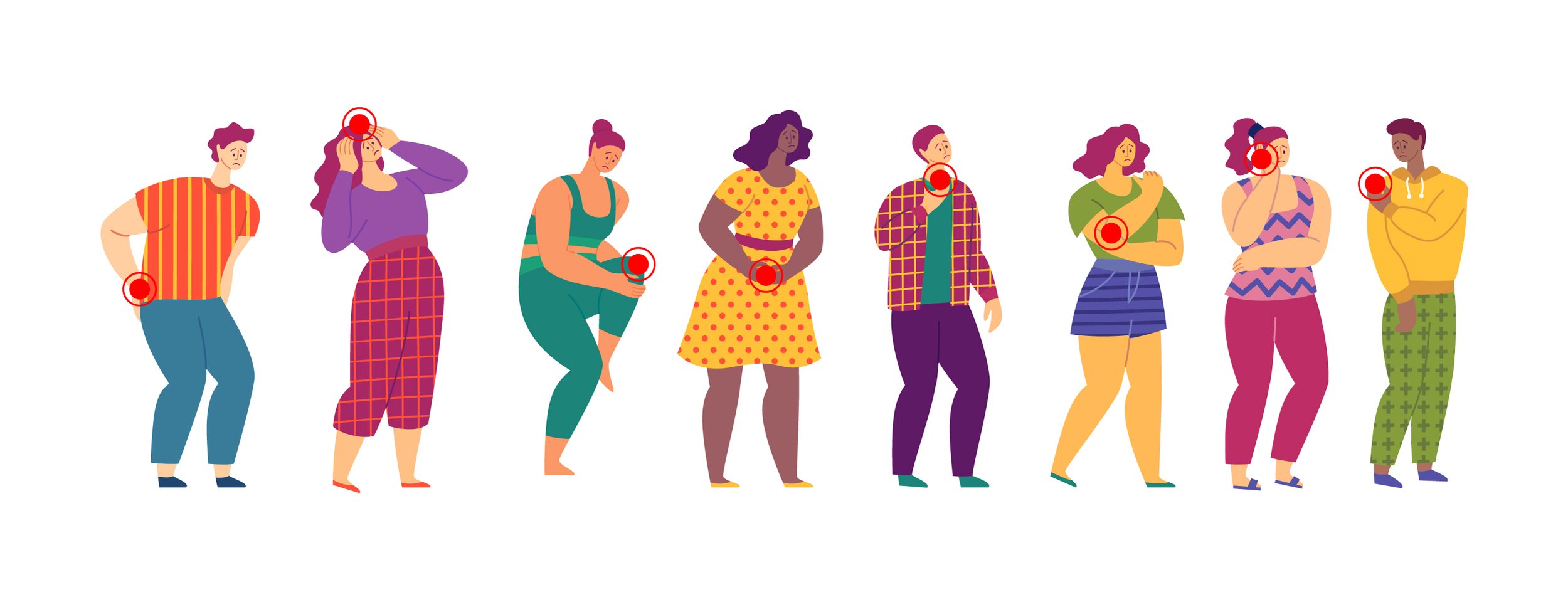
Ok, the red bullseye is kind of a giveaway. But you would know anyway, right? A person’s whole body will curl around the sore spot to give it protection and slack. When I place my hand on the top of your head as an assessment, I’m sensing that same pull in your body’s tissues.

(This is really what it feels like.)
Our body’s first response to pain or another warning signal is to immobilize the area. This is wise and useful to prevent harm and allow healing. But sometimes, the immobility sticks. Maybe the fascia becomes dry because the lockdown doesn’t allow fluids to circulate. Maybe the muscles on guard duty forget they once were movers. With impressive adaptability, our body repatterns itself so that our movements — walking, reaching, breathing, digesting — maintain this area of stasis.

Usually, our body’s protection is focused around something delicate and important, like an artery. Thanks to our body’s ingenuity, we mostly keep functioning, and might not even notice that our experience of fluid expressivity is ever so less dimensional.
Still, adaption tends to lead to counteradaption, and eventually complaints will arise.
The modalities I practice aim to locate the very specific tissues that have lost their bounce and remind them that they are part of a system of movement. As our body and brain experiment with this renewed opportunity, the layers of limitation and workarounds throughout the rest of the body dissolve.
By paying attention to what’s been avoiding attention, this bodywork frees up effort and invites your body to organize around flow.


Some thoughts about mechanotransduction
It all begins with an idea.
Wolff’s law. When I was in massage school, it was one of the mantras that stuck with me: Bone is living tissue and will remodel based on the forces acting upon it.
But what does that mean? And why would a massage therapist care about bones? The answer goes a long way to explaining how manual techniques create change in our tissues — in other words, how bodywork helps you feel better.
You may have heard that weight-bearing exercise is good for increasing bone density. The reason for this is mechanotransduction. Mechanotransduction is a process in which our cells convert mechanical forces such as compression or shearing into chemical and electrical signals. These signals trigger other cells to act and trigger physical, behavioral, and even genetic changes is the original cell.
In your bones, it works like this:

When you pick up a weight, your tendons pull on your bones, deforming cells, moving fluid, and changing electrical signals.
(Remember — bones are living tissue. They’re not as dry or static as you might think!)
Sensory cells pick up these changes and send out their own electrical and chemical signals, which are passed along by bone cells called osteocytes, that trigger osteoblast cells to make more bone.
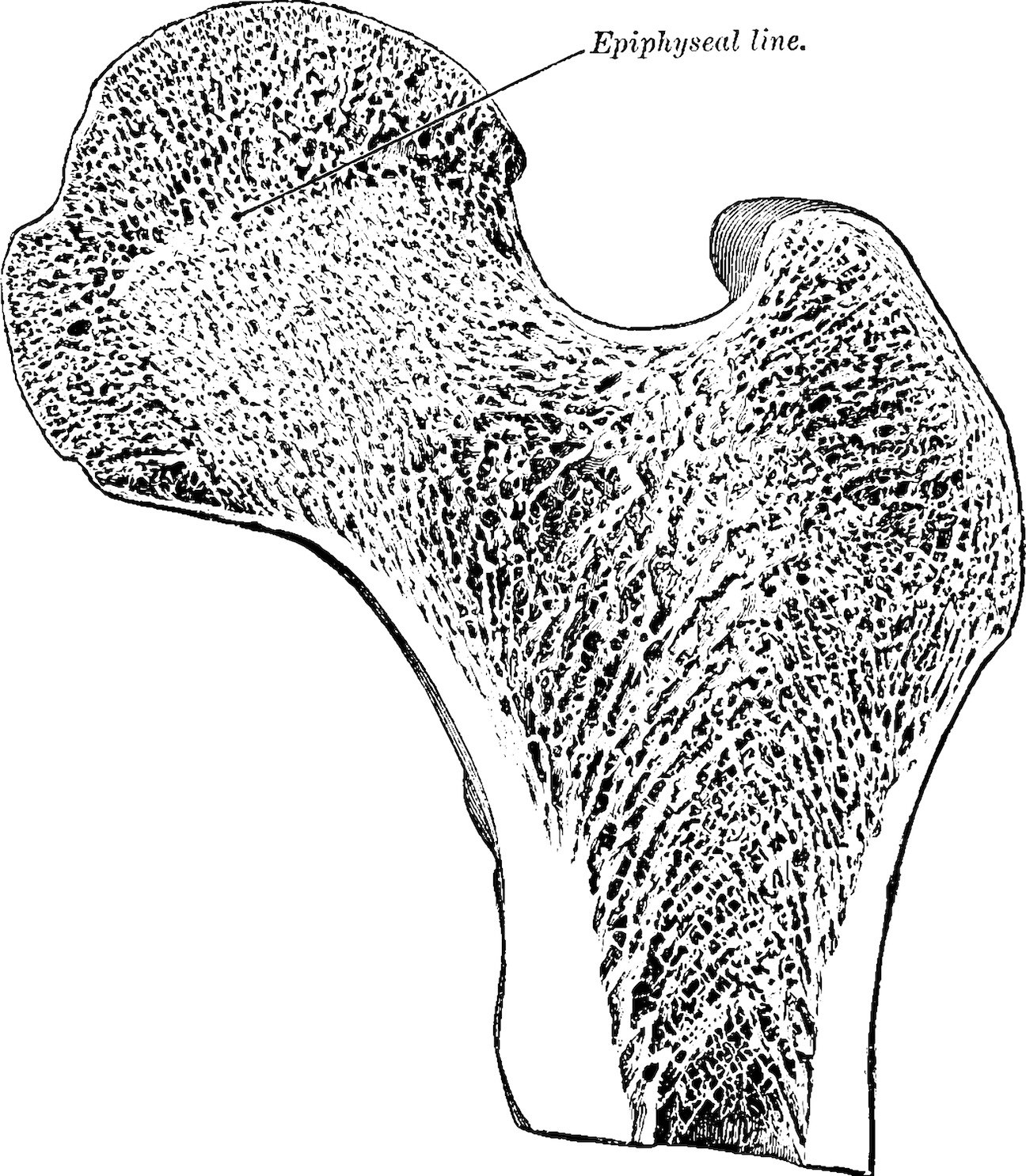
Looking at the intricate detail of bone tissue (this is the head of the femur, where the leg bone connects into the hip socket), it is easy to imagine how cells are laid down in unique patterns corresponding to the exact vectors of strain the body experiences.
For great imagery of the dynamic world inside your bones, check out this video.
And this process doesn’t just happen in bones. Muscles, cartilage, and fascia register strain and call for remodeling in much the same way. The cells lining your bladder and your blood vessels signal when they experience stretch and trigger constriction to modulate your internal fluid and pressure dynamics. Depending on how we move or load our fascia, it can adapt its matrix of cells to include more or less collagen, meaning it will become more gliding and stretchy or more sturdy and solid depending on what it’s been asked to do. Our cells have an ingenious way of communicating their precise experience and needs. If they’re getting squished, something needs to change — and change is on the way.
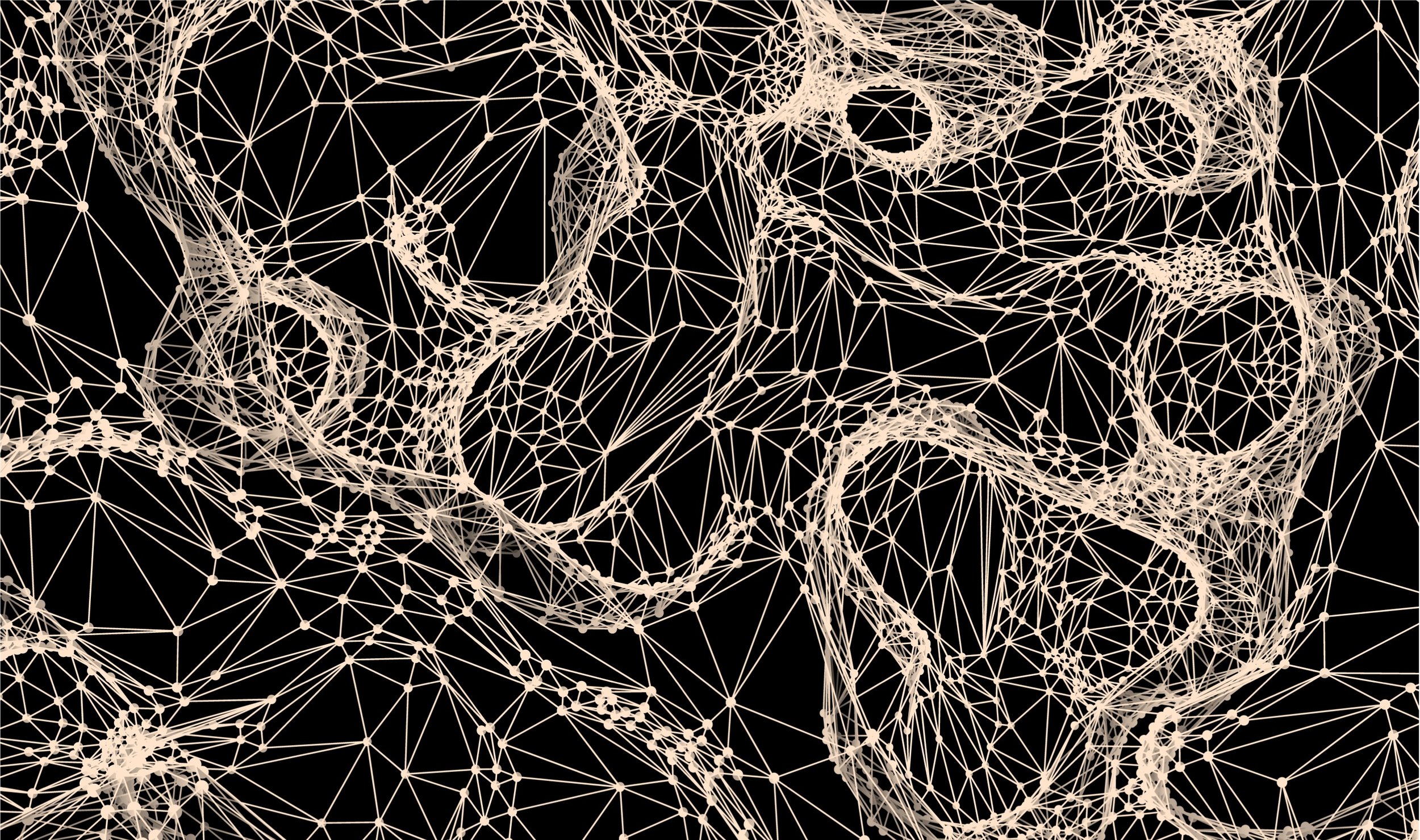
As a manual therapist, I find all this intriguing because stretch and compression is how I communicate with your tissues.
It’s fascinating to consider that bodywork can directly impact cell function and chemistry in the body. In fact, some researchers are working to create drugs that mimic the effect of mechanical force.
It helps explain why giving the body a little bit of slack and space can be so impactful. And how a gentle touch can work to release scar tissue, fascial adhesions, or locked-on muscles. The collagen in our connective tissue is as strong as steel. To break that up I would need a scalpel, not my thumbs, and I’d release a cascade of inflammatory and other responses. Instead, I’m giving specific cells an experience of specific compression and stretch, and they adapt themselves to become cells that move in that way.
And I love knowing that our bodies are made up of a fluid, chemical, electrical matrix that is sensitive, alive, and responsive!


Blog Post Title Three
It all begins with an idea.
It all begins with an idea. Maybe you want to launch a business. Maybe you want to turn a hobby into something more. Or maybe you have a creative project to share with the world. Whatever it is, the way you tell your story online can make all the difference.
Don’t worry about sounding professional. Sound like you. There are over 1.5 billion websites out there, but your story is what’s going to separate this one from the rest. If you read the words back and don’t hear your own voice in your head, that’s a good sign you still have more work to do.
Be clear, be confident and don’t overthink it. The beauty of your story is that it’s going to continue to evolve and your site can evolve with it. Your goal should be to make it feel right for right now. Later will take care of itself. It always does.

Blog Post Title Four
It all begins with an idea.
It all begins with an idea. Maybe you want to launch a business. Maybe you want to turn a hobby into something more. Or maybe you have a creative project to share with the world. Whatever it is, the way you tell your story online can make all the difference.
Don’t worry about sounding professional. Sound like you. There are over 1.5 billion websites out there, but your story is what’s going to separate this one from the rest. If you read the words back and don’t hear your own voice in your head, that’s a good sign you still have more work to do.
Be clear, be confident and don’t overthink it. The beauty of your story is that it’s going to continue to evolve and your site can evolve with it. Your goal should be to make it feel right for right now. Later will take care of itself. It always does.